Paris has numerous famous sights that most visitors can fit into a week, and the rules for seeing them changed a lot in 2026. The Louvre and Versailles now charge visitors from outside Europe more. The Eiffel Tower introduces new fares on 11 January 2027. And one of the city’s best-known viewpoints, Montparnasse Tower, has closed for years of renovation.
This guide covers the 10 top tourist attractions in Paris that most first-time visitors ask about. For each one you’ll find what it costs, when it’s open, how long to allow, and the practical tips that save you time in the queue. Read along!
Quick answer: the must-see attractions in Paris are the Eiffel Tower, the Louvre, the Musée d’Orsay, the Arc de Triomphe, a Seine river cruise, Montmartre and Sacré-Cœur, and the Palace of Versailles (a half-day trip). Add Disneyland® Paris if you’re travelling with children and a cabaret show such as the Moulin Rouge for a night out. Book the Eiffel Tower, Louvre and Versailles online in advance as all three run on timed entry and sell out in peak season.
What’s changed for visitors in 2026–27
Three changes affect almost every visitor, so it’s worth knowing them before you book anything.
First, visitors from outside the European Economic Area now pay more at two of the biggest sights. Since January 2026, a Louvre ticket costs them €32 instead of €22, and Versailles has introduced a similar two-tier price. If you’re from the UK, the US, India or Australia, the higher price applies to you.
Second, the Eiffel Tower brings in new fares from 11 January 2027. Since September 2026, you also have to book stairs tickets in advance, which used to be the easy walk-up option.
Third, Montparnasse Tower’s observation deck closed on 31 March 2026 for a renovation expected to last at least five years. It’s still listed on plenty of older guides, so don’t plan around it.




The 10 top tourist attractions in Paris
1. Eiffel Tower: 2nd floor or summit?
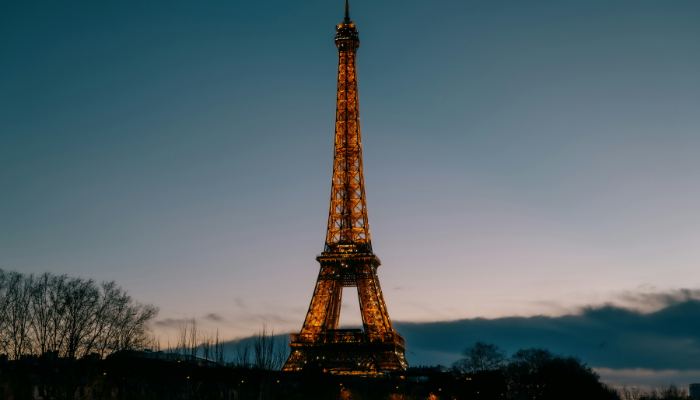
Image credit: Vinicius Brasil for Unsplash
This is the decision that decides your ticket, and most people get it the wrong way round. The 2nd floor, at 116 metres, is where Paris actually looks like Paris and you can pick out the Seine, the Arc de Triomphe, Sacré-Cœur on its hill and the gold dome of Les Invalides. From the summit, at 276 metres, the city flattens into a map. It’s a great story to tell, but not always a better view.
Go to the summit if it’s your one time in Paris and you’d regret not doing it. Otherwise, save the money and the extra queue for the top lift, and spend longer on the 2nd floor at sunset.
Two things catch people out on the way up. The queue for the summit lift starts again on the 2nd floor, so on a summer evening you can wait a long time a second time even with a timed ticket. And it’s noticeably colder and windier up there than on the ground, so carry a layer even in July. If you’re there after dark, stay for the top of the hour, when the whole tower sparkles with lights for five minutes.
Good to know: Open daily from 9:30 AM to 11:00 PM. Allow two to three hours, including security. A ticket for the Eiffel Tower 2nd Floor with Reserved Access & Audio Guide starts at around €79. You can compare Eiffel Tower tickets with reserved access, summit options and other add-ons.
How to book Eiffel Tower tickets
- Decide between the 2nd floor and the summit before you start. Summit slots sell out first.
- Book as soon as your dates are fixed. Summer sunset slots can go weeks in advance.
- If the time you want has gone, look for a reserved-access ticket or a guided tour, which have their own allocation of places.
- Arrive 30 minutes early. Everyone goes through airport-style security, and your slot doesn’t wait.
2. The Louvre: how to see it without wearing yourself out
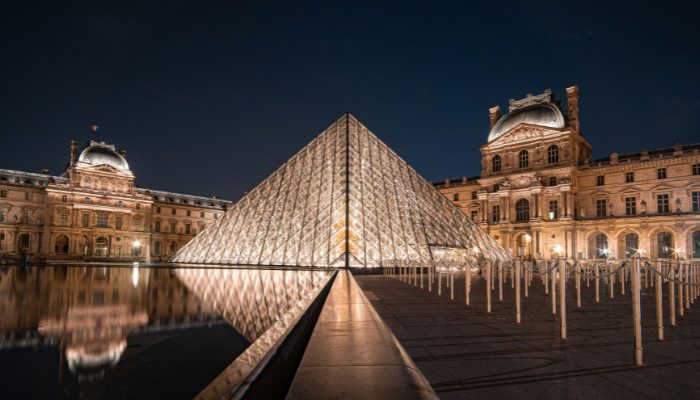
Image credit: Michael Fousert for Unsplash
The Louvre has more than 35,000 works on display, and the mistake is trying to see a fair share of them. Pick three things you genuinely want to see, find them on the map before you arrive, and treat anything else as a bonus. For most people, that’s the Mona Lisa, the Winged Victory of Samothrace on the Daru staircase, and the Venus de Milo.
Go straight to the Mona Lisa when you get in, because the room only gets fuller from there. Then slow down. Some of the best rooms, such as Napoleon III’s apartments in the Richelieu wing, are almost empty while the crowds stay in the Denon wing.
Use the Carrousel du Louvre entrance under the shopping arcade on Rue de Rivoli rather than the glass pyramid. And if your schedule allows, go on a Wednesday or Friday evening, when the museum stays open until 9 pm and the galleries are much quieter.
In the Mona Lisa room, a barrier keeps everyone several metres back, and the line moves you to the front for only a few moments. Turn around before you leave. On the opposite wall hangs Veronese’s The Wedding at Cana, the largest painting in the museum, and almost everyone has their back to it.
Good to Know: Free for under-18s. Open 9:00 AM to 6:00 PM, until 9:00 PM on Wednesdays and Fridays. Closed on Tuesdays. A timed slot with Louvre skip-the-line tickets is strongly recommended. Price for a single ticket starts at around €37 per person and it goes up to around €90 for a guided tour of the museum.
3. Musée d’Orsay: the museum many people end up preferring
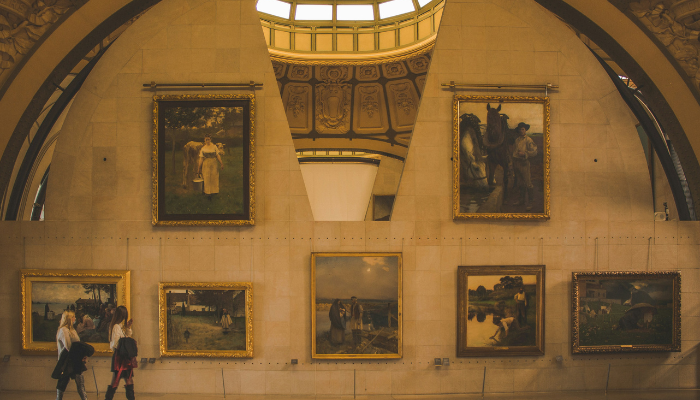
Image credit: Diane Picchiottino for Unsplash
If you only have time for one big museum, it’s a fair question whether it should be the Orsay rather than the Louvre. The Orsay is housed in a former railway station on the Left Bank, and you can see it properly in two or three hours. It holds the world’s largest collection of Impressionist paintings, so if Monet’s water lilies or Van Gogh’s self-portraits are on your list, this is where they are.
Head up to the 5th floor first, where the Impressionist galleries are, and look out through the back of the giant station clock: Sacré-Cœur is framed on the hill across the river. Thursday evening is the time to go.
Good to know: Open 9:30 AM to 6:00 PM, until 9:45 PM on Thursdays. Closed on Mondays. Free on the first Sunday of the month, but you still need to book Orsay Museum tickets. The pass for 50+ museums in Paris including Orsay comes at a price of around €100.
4. Arc de Triomphe: the best view of the Eiffel Tower
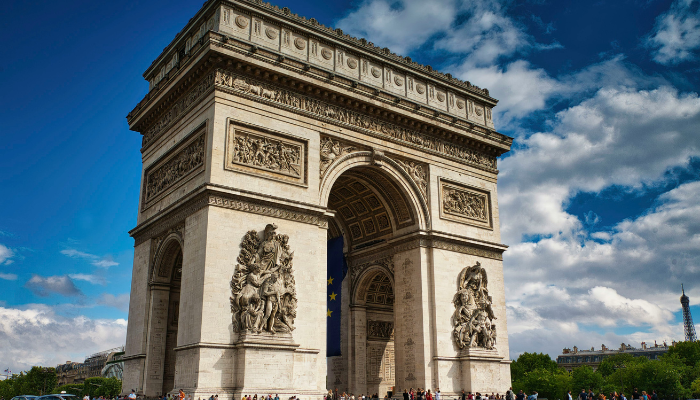
Image credit: ian kelsall for Unsplash
From the top of the Eiffel Tower, the one thing you can’t see is the Eiffel Tower. From the roof of the Arc de Triomphe, it sits right in front of you. Twelve avenues spread out below like spokes, with the Champs-Élysées running straight towards the Louvre.
Getting up there means 284 steps on a tight spiral staircase. There’s a lift, but only for visitors with reduced mobility. Time your visit for about an hour before sunset. And if you’re still around at 6:30 PM, stay to watch the flame on the Tomb of the Unknown Soldier being relit, which happens every evening.
One practical point: don’t try to cross the roundabout to reach the arch. Use the underground passage from the top of the Champs-Élysées.
About two-thirds of the way up, the staircase opens into a small exhibition hall inside the arch. It’s a good place to catch your breath before the last short flight to the roof. The roof terrace itself is narrow, so on a busy evening it’s worth walking the full way round before you settle on a spot for photos.
Good to Know: Rooftop access is free for under-18s and EEA residents aged 18–25. Open from 10:00 until 10:30 or 11:00 PM depending on the season. Closed on 1 January, 1 May and 25 December. You have to book Arc de Triomphe rooftop tickets ahead for summer evenings. General admission including rooftop access is priced at around €18.
5. Seine river cruise: day, sunset or dinner?
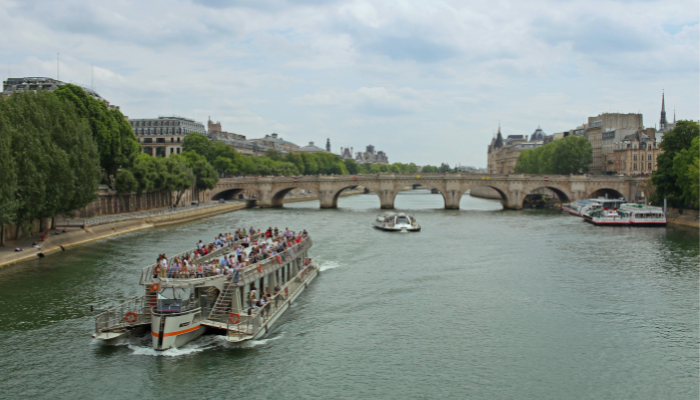
Image credit: J Shim for Unsplash
A one-hour cruise takes you past Notre-Dame, the Louvre, the Orsay and the Eiffel Tower without any walking, which makes it a good first-afternoon activity when you’ve just arrived and are short on sleep. The real choice is when to go.
A daytime cruise is best for photos and for first-timers who want their bearings. A sunset sailing is the one we’d pick: you see the buildings in daylight on the way out and lit up on the way back. A dinner cruise is a lovely setting for a special occasion, but you’re there for the view more than the food.
Boats leave from several piers. Bateaux Parisiens sail from beside the Eiffel Tower, Bateaux-Mouches from Pont de l’Alma, and Vedettes du Pont Neuf from the tip of the Île de la Cité, which is closest if you’re staying in the centre.
Whatever time you go, take a jacket. The open upper deck is where you want to be for the views and photos, but once the sun goes down the wind off the river makes it surprisingly cold, even in summer. Boarding early is the only way to get a seat at the rail.
A basic Seine River Cruise ticket comes at a price of around €17 whereas a lunch cruise is priced at around €70.
6. Montmartre: a walk worth taking slowly
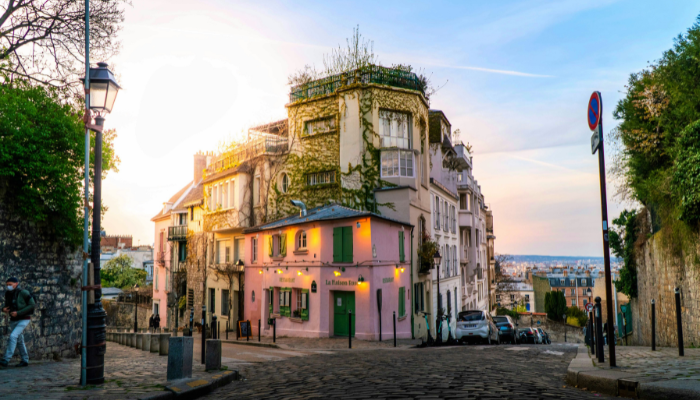
Image credit: Bastien Nvs for Unsplash
Montmartre is free, and it’s best done on foot over a morning, before the tour groups arrive. A simple route:
Start at Abbesses metro station. It’s very deep, so take the lift rather than the spiral stairs. Around the corner in Square Jehan Rictus is the Wall of Love, with “I love you” written in more than 250 languages. From there, wander uphill to Rue de l’Abreuvoir and the pink-walled café La Maison Rose, then on to Place du Tertre, where portrait artists set up their easels. Finish at Sacré-Cœur, whose steps look out over the whole city.
If you’d rather skip the climb, take the funicular up from the bottom of the hill near Anvers station; it costs a single metro ticket. On the steps below the basilica, ignore anyone who offers to tie a “free” bracelet on your wrist. They’ll expect money once it’s on.
If you need a break, Le Grenier à Pain on Rue des Abbesses has won the city’s best baguette prize more than once, and its bread makes an easy breakfast to eat on the move. For a quieter corner, look over the fence at the Clos Montmartre on Rue des Saules, a working vineyard in the middle of Paris, or walk through the gardens behind the Musée de Montmartre, where Renoir once had a studio.
Good to know: Free to explore; Sacré-Cœur is free to enter, and you can also climb the dome. Allow half a day. If you’d like the stories behind the streets, join a Montmartre tour.
7. Cabaret shows: which one should you book?
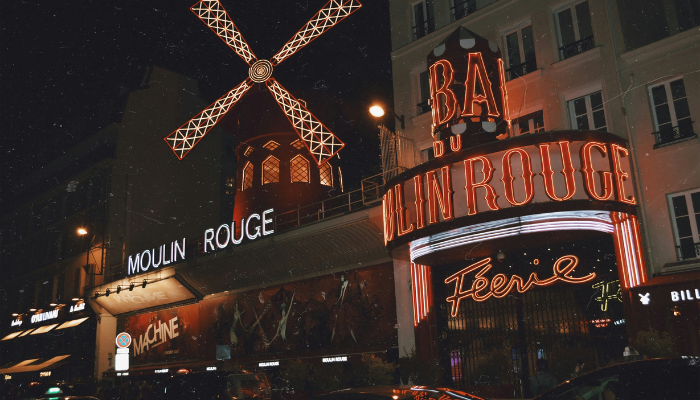
Image credit: Cristina Manzaneque for Unsplash
Paris has three cabarets most visitors choose between, and each suits a different kind of evening.
The Moulin Rouge, at the foot of Montmartre, is the famous one: the red windmill, the cancan and a cast of around 60 dancers in its Féerie show. Book this if it’s a bucket-list night and you want the name.
Paradis Latin, in the Latin Quarter, is the oldest cabaret in the city, in a hall whose structure Gustave Eiffel worked on. It’s livelier and more theatrical than the Moulin Rouge, and it runs a family show on some afternoons. Book this if you want a more intimate show or you’re travelling with children.
Crazy Horse, near the Champs-Élysées, is a shorter, more artistic show built around light and choreography, and it’s for adults only. Book this for a stylish evening for two.
Whichever you choose, smart casual is expected: no shorts, sportswear or trainers.
Expect to sit close together. At the Moulin Rouge in particular, tables are packed in and you’ll often share one with other guests. The room is at its loudest for the cancan finale, so don’t leave early to beat the queue for the cloakroom. Compare venues and times for Paris Cabaret Show Tickets.
8. Versailles: how to plan the day
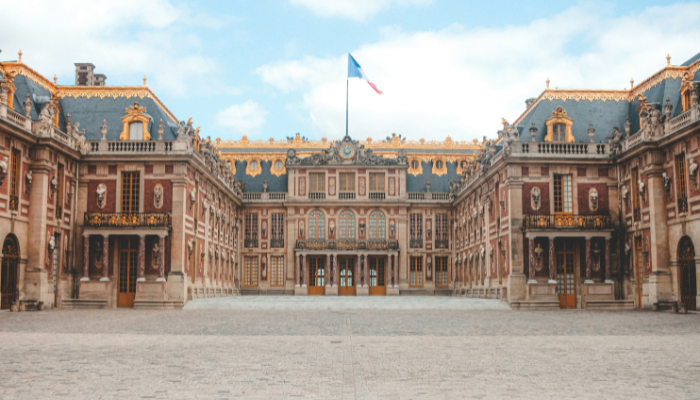
Image credit: Mathias Reding for Unsplash
Versailles is 20 km from central Paris, about 40 minutes on the RER C to Versailles Château Rive Gauche, and it fills a day more easily than people expect. The trick is to go against the flow. Most visitors head straight for the palace in the morning, so do the opposite: spend the morning in the gardens and Marie Antoinette’s estate at Trianon, then go into the palace after 3:00 PM, when the Hall of Mirrors is far less packed.
Avoid Mondays, when the palace is closed, and Tuesdays, when the Louvre is closed and tour groups come here instead. If you’re visiting on a weekend between April and October, the Musical Fountains show in the gardens is worth adding to your ticket.
In late morning, the Hall of Mirrors can be so full that it’s hard to see the mirrors at all, let alone the painted ceiling. By late afternoon you can usually stand in the middle of it and look up.
Good to know: Choose the Passport ticket if you want the palace, Trianon and gardens in one. Free for under-18s. The palace opens at 9:00 AM and is closed on Mondays. For transport and a guide in one booking, check Palace of Versailles Tours.
9. Disneyland® Paris: is it worth a day of your trip?
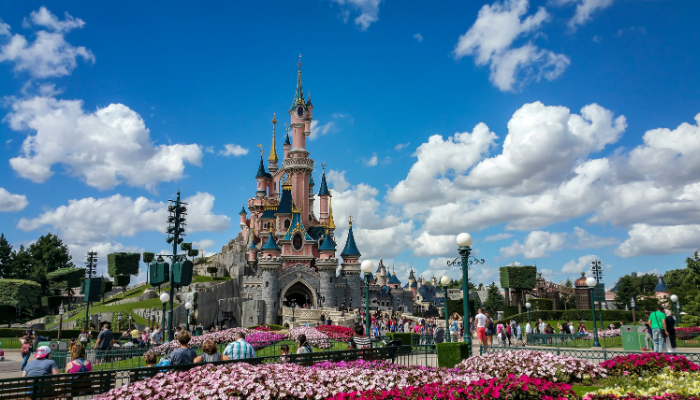
Image credit: Toni Pomar for Unsplash
If you’re travelling with children, yes. It’s probably the day they’ll remember most. If you’re a couple on a short first trip, it’s harder to justify giving up a whole day of Paris for it.
There are two parks. Disneyland Park is the classic one, with Sleeping Beauty Castle. The second park, now called Disney Adventure World, reopened in March 2026 with a new World of Frozen area. For most families, one park in a day is plenty. Choose the two-park ticket only if you’ll be there when the gates open and stay for the evening show.
Good to know: Book dated tickets early, especially for school holidays. The RER A takes 35 to 45 minutes from central Paris to Marne-la-Vallée–Chessy. Find dated and flexible Disneyland Paris tickets.
10. Montparnasse Tower: closed, so go here instead
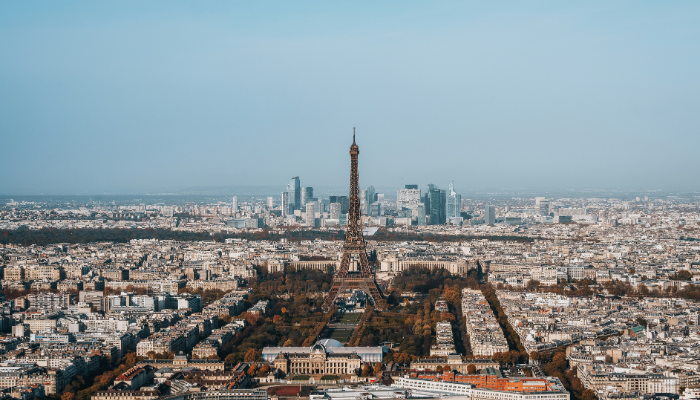
Image credit: Masood Aslami for Unsplash
For years, Montparnasse Tower’s 56th-floor deck was the insider’s pick for a view of Paris with the Eiffel Tower in it. It closed on 31 March 2026, and the renovation is expected to last at least five years, so expect it back around 2031 at the earliest.
For a similar view, the Arc de Triomphe rooftop is the closest match. The rooftop terrace of the Galeries Lafayette department store is free and looks across the Opéra Garnier towards the Eiffel Tower. Sacré-Cœur’s dome gives you a wide view from Montmartre, the highest natural point in the city. Skip the Centre Pompidou’s famous terrace for now too: the building closed in 2025 for its own long renovation.
Worth it or overrated? My honest take
Not every famous sight deserves the same share of a short trip. Here’s where we’d spend time, and where we wouldn’t.
The Mona Lisa is the most overrated few minutes in Paris. It’s small, behind glass, and you’ll see it over a crowd of phones for a minute or so. See it, because you’ll wonder otherwise, but don’t build your Louvre visit around it.
The Eiffel Tower summit is a close second. The 2nd floor has the better view and a shorter wait. The Champs-Élysées is a fine walk to the Arc de Triomphe, but the shops are the same chains you have at home.
On the other side, the Orsay and the Arc de Triomphe rooftop are the two we’d push first-timers towards, and both are easy to fit around everything else. A sunset Seine cruise is the hour of the trip people tend to talk about afterwards.
One more underrated pick: the Tuileries Garden between the Louvre and Place de la Concorde. It’s free, it has plenty of green metal chairs to pull into the sun, and it’s the best place in central Paris to sit down for half an hour between sights.


A realistic 3-day plan
Closing days shape everything, so this plan assumes you arrive on a Monday. On a Monday the Louvre is open, but the Orsay and Versailles are not.
Day 1 (Monday): Louvre at opening time, then lunch and a walk through the Tuileries Garden. In the late afternoon, take a Seine cruise from the Eiffel Tower pier and go up the tower at sunset.
Day 2 (Tuesday): Montmartre in the morning, while it’s quiet. Orsay in the afternoon, then the Arc de Triomphe rooftop before dark. End the day with a cabaret show.
Day 3 (Wednesday): Versailles for the day, which avoids the Tuesday crowds. With children, swap it for Disneyland® Paris.
If you’d rather not use the metro, a Paris hop-on hop-off bus links most of the central sights on days 1 and 2.
Before you book
A short trip to Paris works best with a few priorities, not a checklist of everything. Book the three sights that sell out first, the Eiffel Tower, the Louvre and Versailles, as soon as your dates are fixed. Plan the rest around their closing days, and leave your evenings free for the views.
You can find tickets and tours for every attraction in this guide on isango!. If you’re planning to get around by bus, read our comparison of Tootbus vs Big Bus hop-on hop-off tickets in Paris before you buy.