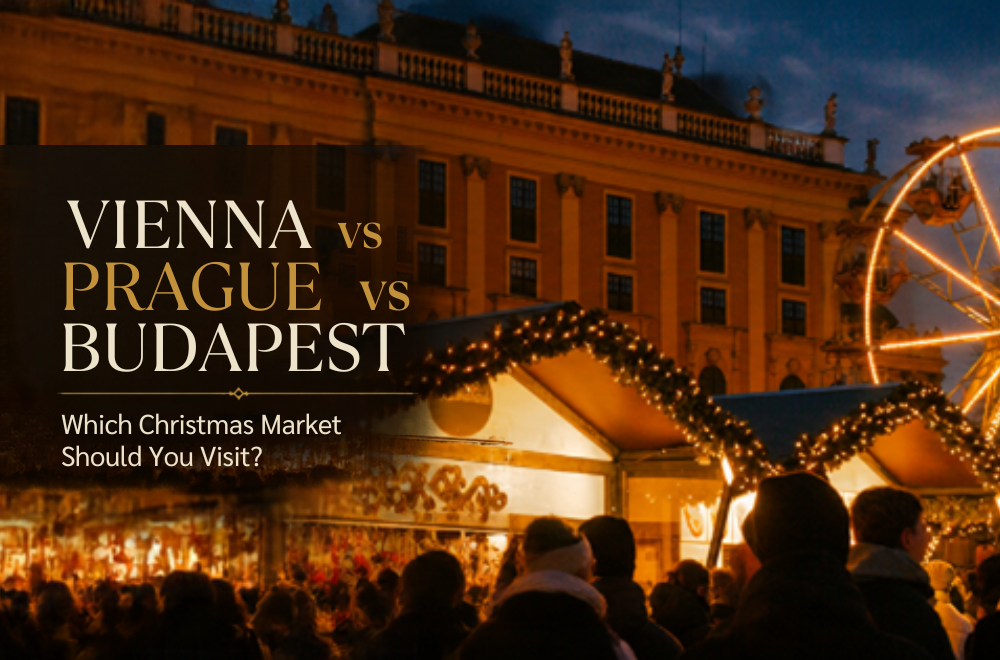
If you’ve only got one December trip in you, it matters which side of the Vienna vs Prague vs Budapest Christmas market question you land on. The three cities sit a few hours apart by train, and each one turns up on somebody’s “best in Europe” list. They aren’t interchangeable, though.
Prague’s main market opens on 28 November, a full two weeks after the other two. A mug of mulled wine in Vienna can cost close to double what it does in Budapest. And the people who come home underwhelmed tend to be the ones who spent every evening in the one square that ends up on postcards.
Below you’ll find the 2026 dates, what things cost, and what travellers who’ve done all three said once they got home.
The Quick Answer: Which Christmas Market to Visit?
Vienna, if you want lots of markets to choose from and an Advent concert after dinner. Budget for it; it’s the priciest of the three.
Prague, if the tree in front of the Týn Church spires is the picture in your head, or you’re travelling between Christmas and 6 January.
Budapest, if you care more about what you eat than what you buy, and you’d like a hot outdoor bath between markets.
With five or six days, pair Vienna and Budapest; the train between them takes under three hours. With eight nights or more, you can fit in all three.

Pick by Your Travel Dates
Most people skip this fact, but opening and closing dates may make the decision for you.
| If you’re there.. | Go to | Why |
| 13-27 November | Vienna or Budapest | Both open their big markets on 13 November. Prague’s main squares don’t open until the 28th |
| 28 November – 23 December | Any of them | Everything’s open. Weekdays in the first half of December are the calmest |
| 24-26 December | Prague or Vienna | Hours get cut short on Christmas Eve everywhere: Rathausplatz shuts at 18:30, Vörösmarty at 14:00. Check holiday times before you plan around a market |
| 27-31 December | Prague, Budapest or Vienna’s Schönbrunn | Rathausplatz has closed for the year; Budapest’s two big markets keep going |
| 1-6 January | Prague, or Schönbrunn in Vienna | Old Town Square and Wenceslas Square run until 6 January. Budapest’s Basilica market packs up after New Year’s Day |
Vienna Christmas Markets: Best for Choice and Concerts
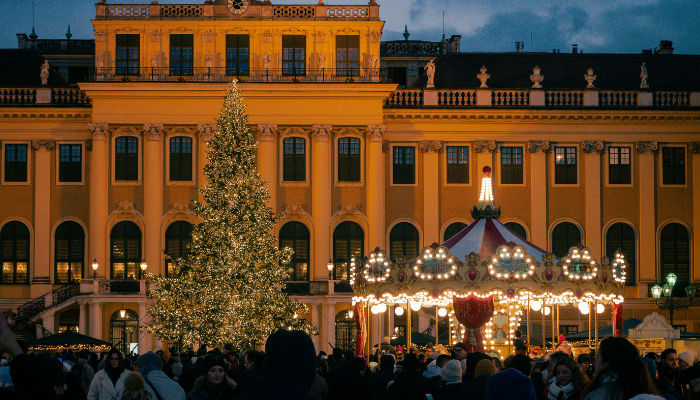
Image credit: Mario Tuzon for Unsplash
Vienna doesn’t have a Christmas market so much as a network of them. The city licensed 15 for 2026, with 814 stalls between them, and that spread is its biggest advantage. If one square is rammed, there’s usually another a few minutes’ walk or a couple of U-Bahn stops away.
The markets worth your time
Wiener Christkindlmarkt, Rathausplatz (13 Nov – 26 Dec, 10:00–22:00). The big one, 97 stalls in front of the neo-Gothic City Hall, with an ice rink winding through the park next door until 6 January. Choirs give free concerts inside the City Hall’s ceremonial hall during Advent. Expect crowds after 5pm.
Schönbrunn Palace Christmas Market (6 Nov – 6 Jan). Stalls in the palace forecourt, good food, and one of the few Vienna markets still going after Christmas. A Reddit traveller who’d seen it summed up the setting with a single “Omg!”
Spittelberg (13 Nov – 23 Dec). Stalls squeezed into narrow 18th-century lanes behind the MuseumsQuartier. It had the cheapest punch in a 2024 price check by Vienna’s local news site, and a €3 mug deposit rather than the usual €5.
Am Hof and Freyung (to 23 Dec). Two old squares a few minutes apart in the first district. Freyung’s Altwiener market is the traditional one: nativity figures, ceramics, live Advent music.
Art Advent, Karlsplatz (to 23 Dec). In front of the Karlskirche dome, with makers selling their own work. If you only buy one present in Vienna, buy it here.
What to eat and drink
Punsch is the local drink: hot fruit punch, usually with rum, and stronger than it tastes. Glühwein is the plain mulled wine. Get a paper cone of Maroni (roasted chestnuts) to warm your hands, and leave room for a Bratapfel, a baked apple stuffed with marzipan or nuts.
At Rathausplatz, mulled wine averaged €6.25, plus a €5 deposit on the mug. Hand the mug back at any stall in the same market and you get the deposit back. Or keep it; plenty of people collect them.
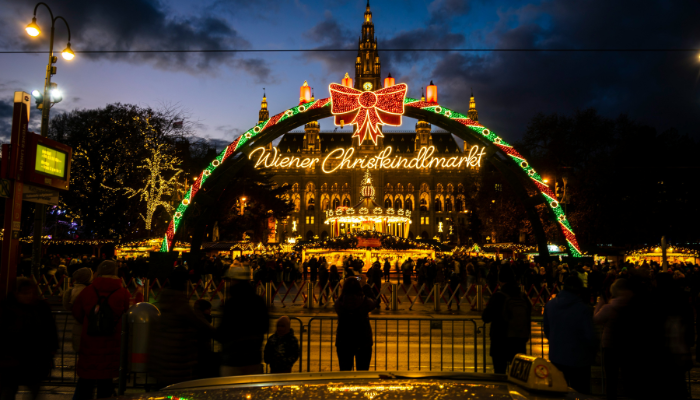
Image credit: Jeffrey Zhang for Unsplash
Who’ll love it, and who won’t
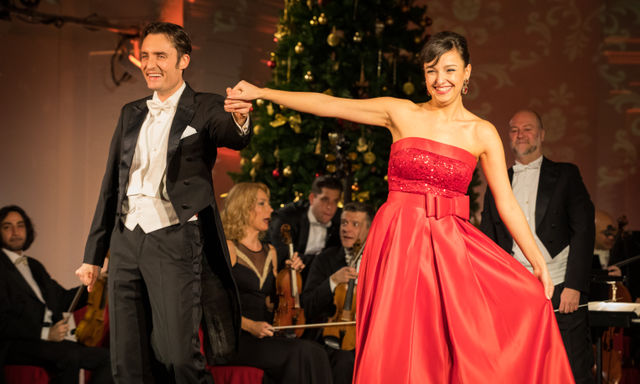
Go if you’ll want something to do in the evening besides drink punch. Vienna has Advent concerts in churches and concert halls all through December, plus the Kunsthistorisches and the Belvedere’s Klimts for cold afternoons. Families do well here too: the Rathausplatz rink, a two-storey carousel and a children’s area in the park.
Skip it if money’s tight. Vienna’s hotels in December are the most expensive of the three cities. And the markets are spread across districts, so you’ll be riding the U-Bahn between them rather than strolling square to square.
Prague Christmas Markets: Best for the Setting
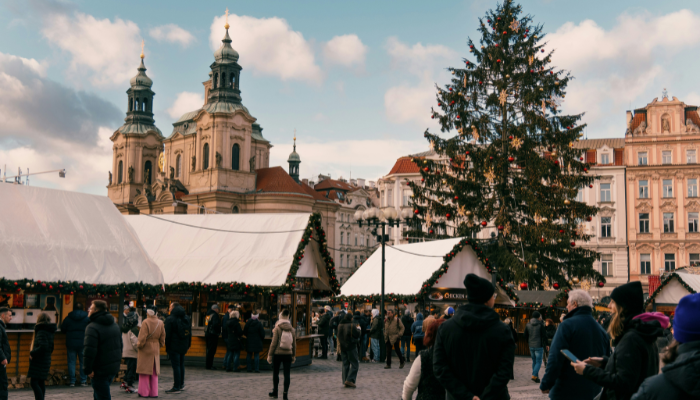
Image credit: Samuel Quek for Unsplash
Prague’s whole pitch is one view: a huge tree on Old Town Square, the two black spires of the Týn Church behind it, the astronomical clock round the corner. In person it lives up to the photos. It’s also the most crowded of the three after dark, and the stalls know exactly who they’re selling to.
The markets worth your time
Old Town Square (28 Nov – 6 Jan, 10:00–22:00). The famous one. There’s a raised platform for photos over the stalls, but the better view is from the Old Town Hall tower.
Wenceslas Square (28 Nov – 6 Jan). Five minutes’ walk away, longer and more spread out, heavier on food than crafts.
Náměstí Míru, Vinohrady (closes 24 Dec). A neighbourhood market in front of the Church of St Ludmila, two metro stops from the centre. More locals, lower prices, and a church that’s just as photogenic.
Náměstí Republiky (closes 24 Dec). Next to the Municipal House; handy if you’re staying near Old Town.
Things to remember: there’s been no Christmas market at Prague Castle since 2022, according to a licensed Prague guide. If an article still lists one, it hasn’t been updated.
What to eat and drink
Svařák is Czech mulled wine; grog is hot water, rum and lemon, and better than it sounds. For food, go for klobása (grilled sausage) or bramboráky, crisp potato pancakes.
Two warnings. The spit-roasted Prague ham on Old Town Square is priced per 100 grams, and a careless order can turn into a very expensive lunch, so ask for the total before they carve. And the trdelník you’ll see everywhere, rolled dough baked on a spit, is a recent arrival in Prague rather than an old Czech Christmas tradition. Eat one if you like, but don’t treat it as the authentic local thing.
On price, Prague sits in the middle. A 2024 Christmas market price survey ranked it the fifth-best value in Europe; Vienna was near the expensive end.
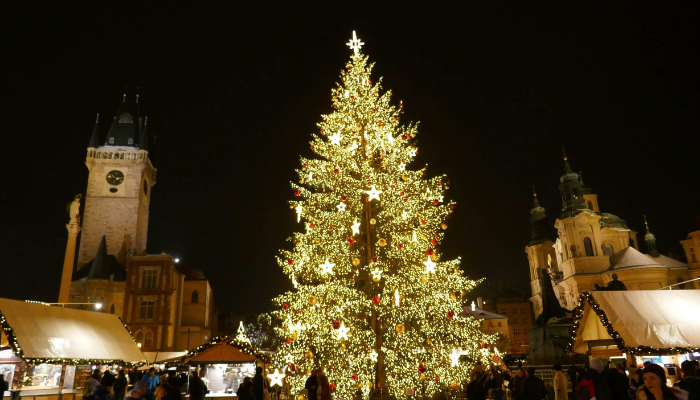
Image credit: Carnet de Voyage d’Alex for Unsplash
Who’ll love it, and who won’t
Prague suits first-timers who want the scene they’ve seen on Instagram, anyone whose trip runs into January, and beer drinkers, who’ll find the pubs as good a reason to visit as the markets.
It’s the wrong pick if crowds ruin things for you, or if you want to come home with handmade gifts. You’ll find them, but not on the main squares.
Budapest Christmas Markets: Best for Food, Value and Thermal Baths
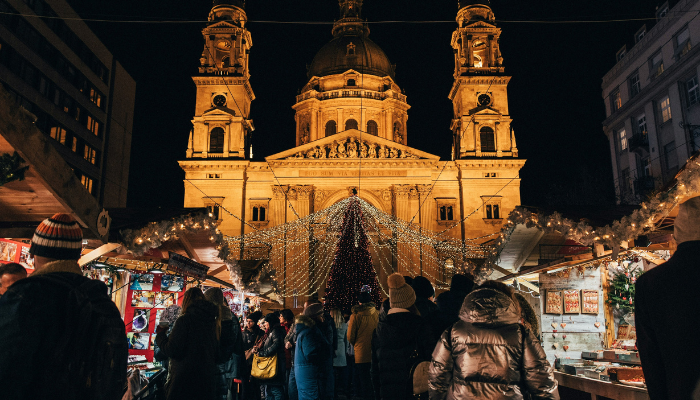
Image credit: Krisztian Tabori for Unsplash
Budapest has fewer markets than Vienna, really just two big ones, ten minutes’ walk apart. What it does better is food. Moreover, travellers on Reddit rated Budapest’s food the best of the three by some distance, and singled out salmon roasted over open wood fires.
The markets worth your time
Vörösmarty Square (Vörösmarty Classic Xmas, 13 Nov – 31 Dec). The oldest and biggest, with a focus on Hungarian-made crafts. Open 11am to 9pm, until 10pm on Fridays and Saturdays, and only 10am to 2pm on Christmas Eve.
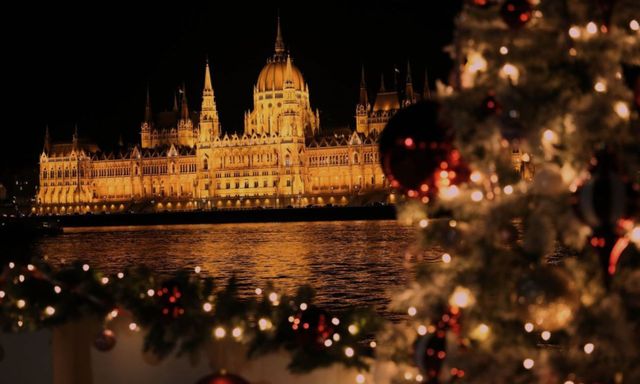
St Stephen’s Basilica (Advent Basilica, 13 Nov – 1 Jan). An ice rink circles the tree, and the basilica front becomes a screen for light shows in the evening. Local guides rate its craft stalls above Vörösmarty’s, and it’s the calmer of the two.
There are a handful of smaller markets (City Hall Park, the Castle District) and they are worth your visit.
What to eat and drink
Start with lángos: deep-fried dough smeared with sour cream and garlic and buried in grated cheese. People upvoted it on different forums and they said that they went to Retro Lángos twice in their two-day trip. Then kürtőskalács, the chimney cake rolled in sugar and cinnamon and baked over coals, which actually is a Hungarian tradition. For something more filling, töltött káposzta (stuffed cabbage) is the dish locals eat at Christmas, and bejgli, a walnut or poppy-seed roll, is what they take home.
Forralt bor, Hungarian mulled wine, cost about 1,350 forints (roughly €3.50) in a 2023 survey, against about €5.50 in Vienna. Bring some forints for the smaller stalls.
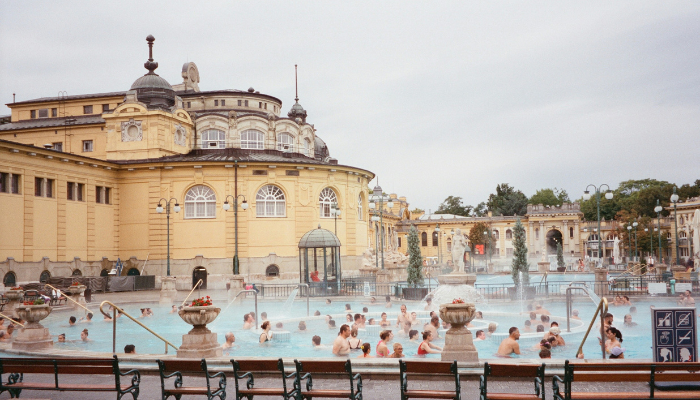
Image credit: Jacob Fryer for Unsplash
Who’ll love it, and who won’t
Budapest is the one for food lovers and anyone on a budget. Széchenyi Baths, in City Park, is a short metro ride from the markets, and a soak in its steaming outdoor pools on a freezing afternoon is hard to beat. The ruin bars take care of the evenings or you can choose between a day or nighttime Budapest sightseeing cruise.
If you mainly want to shop, or to spend several days market-hopping, two big markets will run out fast. Budapest works best as a three-night trip, or as one stop on a longer one.
Head-to-Head: Best Christmas Market Vienna Prague Budapest: How the Three Compare
Setting
Nothing in Vienna or Budapest matches the first look at Old Town Square. Vienna counters with range: a palace courtyard, a baroque church square, Biedermeier lanes. Budapest’s best moment is the light show on the basilica, though the square around it is plainer.
Winner: Prague, for the single best view. Vienna if you’d rather have ten good ones.
Food
Budapest, and it isn’t close. Vienna is better for sweet things and anything involving rum. Prague’s main squares lean on sausages, ham and trdelník, much of it overpriced.
Winner: Budapest.
Prices
Budapest has the cheapest drinks and hotels. Prague comes second. Vienna is the most expensive on almost every count, though a Budapest-based guide makes a fair point: the savings there come mostly from hotels and transport, and some stall food costs about the same as in Austria.
Winner: Budapest.
Crowds
Vienna’s big advantage is that crowds have 15 places to go. Prague concentrates almost everyone on one square, which gets uncomfortable after dark. Budapest’s two markets fill up on weekend evenings.
Winner: Vienna.
Things to buy
Budapest’s markets focus on Hungarian-made crafts, and Vienna’s Karlsplatz and Spittelberg are full of genuine makers. Prague’s main squares are the weakest of the three for anything you’d want to keep.
Winner: Budapest, with Vienna’s smaller markets close behind.
Beyond the markets
Cold December afternoons are where the cities really differ. In Vienna you can duck into the Kunsthistorisches or book an Advent concert for the evening or go for a Vienna river cruise. Budapest’s answer is a thermal bath, followed by a ruin bar. Prague has less to offer once it’s dark at 4pm, beyond very good, very cheap beer.
Winner: Vienna, narrowly, unless an afternoon in a hot outdoor pool sounds better than an Advent concert. In which case, Budapest.
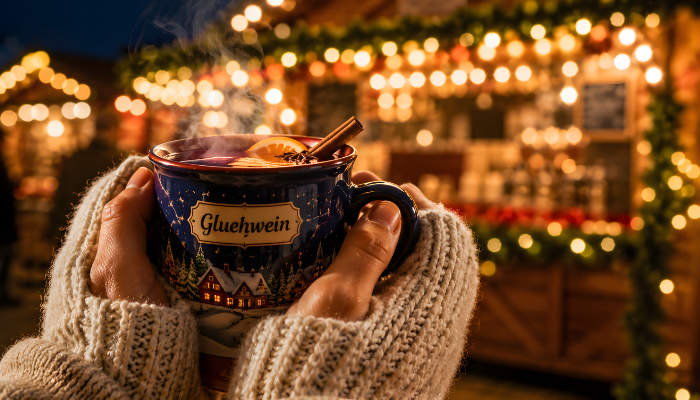
Image credit: Marco Verch under Creative Commons 4.0
Can You Visit All Three? A Sample Itinerary
Yes, and if you have eight nights or more, you should. Travel in a line: start in Prague and end in Budapest, or the reverse, and book an open-jaw flight. Flying in and out of Vienna means doubling back, a mistake forum regulars warn about.
Nine nights (comfortable): Prague 3, Vienna 3, Budapest 3.
Seven nights (rushed but doable): Prague 2, Vienna 3, Budapest 2.
Aim to travel between 28 November and 23 December, the window when every main market in all three cities is open.
| Route | Direct train? | Journey time |
| Prague to Vienna | Yes | Approx 4 hours |
| Vienna to Budapest | Yes | Approx 2 hours 40 minutes |
| Prague to Budapest | Yes, via Bratislava, roughly every two hours, plus a night train | Approx 6 hours 50 minutes |
Only have time for two? Vienna and Budapest is the easiest pair: the shortest train ride, and the two cities feel different enough that you won’t get bored. Prague and Vienna is the classic alternative.
Beyond the Big Three: Bratislava, Brno and Castle Markets
The most upvoted comment in any of the threads we read had nothing to do with Vienna, Prague, Budapest Christmas comparison. It just said: go to the Christmas markets in Brno. Brno is the Czech Republic’s second city, on the train line between Prague and both Vienna and Budapest, so it’s an easy stop or overnight on the way through. Another commenter added Olomouc, about an hour from Brno.
Bratislava came up twice. It’s about an hour from Vienna by train, and its market is small but heavy on local produce and food. One Redditor, asked whether a Budapest family should take a day trip to Vienna, suggested Bratislava instead.
And if you’re in Vienna with a car, or happy to book a tour, look up the castle Advent markets at Schloss Hof, Schallaburg and Burg Aggstein. One traveller called them the nicest markets in the area. They don’t run every day like the city markets, so check opening dates before you go.

Image credit: Marco Verch under Creative Commons 4.0
Practical Tips for All Three Cities
The mug deposit. Your first hot drink costs more than the sign says because it includes a deposit on the mug (usually €3–5 in Vienna). Return the mug to any stall at the same market to get it back.
Carry some cash. Cards work at most big stalls, but not all of them, especially in Austria. Have euros, Czech crowns and forints for the right cities.
Browse by day, come back at dusk. Travellers found Prague’s Old Town Square impossible at night and empty enough to enjoy during the day. It’s dark by about 4pm, so a late-afternoon visit gets you both.
Go on a weekday. Friday and Saturday evenings are the worst in all three cities.
Watch your pockets on Old Town Square and at Rathausplatz, the two busiest markets.
Ask before the ham is carved in Prague. It’s sold by weight.
Dress for standing still. December highs hover around freezing to 5°C, and you’ll be outside for hours without moving much. Warm boots matter more than a smart coat.
Christmas Day isn’t a write-off. Vienna’s Rathausplatz and Schönbrunn markets stay open, and one river-cruise traveller spent 25 December in Vienna and found plenty of shops and restaurants open. Book Christmas Eve dinner ahead in any of the three.


Vienna vs Prague vs Budapest at a Glance
A Vienna, Prague and Budapest Christmas comparison, on one screen. Please note that the drink prices come from 2023–24 surveys.
| Vienna | Prague | Budapest | |
| Main market opens | 13 Nov (Schönbrunn 6 Nov) | 28 Nov | 13 Nov |
| Main market closes | 26 Dec (Schönbrunn 6 Jan) | 6 Jan | 31 Dec (Basilica 1 Jan) |
| How many markets | 15 official, 814 stalls | 2 big, several small | 2 big, a few small |
| Mulled wine | about €6 + €5 mug deposit | Cheaper than Vienna | about €3.50 |
| Worst crowds | Rathausplatz after dark | Old Town Square after dark | Vörösmarty at weekends |
| Eat this | Punsch, roasted chestnuts | Svařák and klobása | Lángos |
| Best for | Choice, concerts, kids | The setting, late trips | Food, budget, baths |

Image credit: Marco Verch under Creative Commons 2.0
Our Verdict: The Best Christmas Market in Vienna, Prague or Budapest
If a friend asked us to pick just one between Vienna vs Prague vs Budapest Christmas market, we’d say Budapest for a long weekend and Vienna for a week.
Budapest’s two big markets are ten minutes apart, the food is the best of the three, and your money goes further. Three nights is about right. Vienna needs more time to make sense: its strength is having 15 markets to explore, and you only feel that with three or four nights there.
Prague is the right call in two cases: you’re travelling after Christmas, or the Old Town Square scene is the reason you want to go at all. Just plan to see it in daylight, and spend your evenings somewhere quieter.
Still weighing up other cities, from Strasbourg to Nuremberg? Our guide to the best Christmas markets in Europe covers the rest of the continent.
Merry Christmas everyone!!