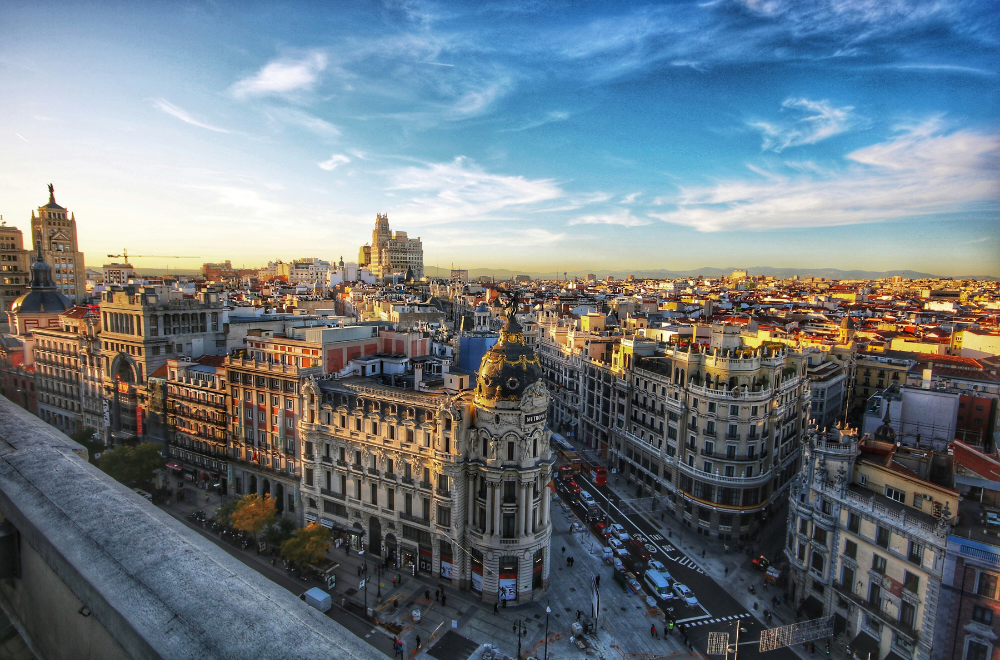
Madrid has a way of surprising people.
Many first-time visitors arrive expecting grand palaces, world-famous museums, and bustling plazas. Those are certainly here. But what makes Spain’s capital memorable is the way history, art, food, and everyday life blend together. One moment you’re standing inside a royal residence with thousands of rooms; the next, you’re sharing tapas with locals in a centuries-old market.
If you’re planning your first trip and wondering which Madrid attractions deserve a place on your itinerary, this guide covers the landmarks, neighborhoods, museums, and experiences that capture the city’s spirit. Whether you’re visiting for a weekend or a longer Spanish adventure, these are some Madrid landmarks that shouldn’t be missed. Have a read!
What Are the Must-See Madrid Attractions?
Before starting the details, here is the list of the top Madrid tourist attractions worth prioritising:
- Royal Palace of Madrid
- Prado Museum
- Retiro Park
- Plaza Mayor
- Puerta del Sol
- Gran Vía
- Reina Sofía Museum
- Temple of Debod
- Santiago Bernabéu Stadium
- Mercado de San Miguel
- Almudena Cathedral
- Thyssen-Bornemisza Museum
- Cibeles Palace and Fountain
- Barrio de Las Letras
- El Rastro Market

Why Madrid Captivates First-Time Visitors
Unlike some European capitals that feel designed around tourism, Madrid still feels lived-in. Locals fill the parks, cafés stay busy late into the evening, and neighbourhood markets continue serving residents rather than just visitors.
The city is also surprisingly compact. Many major Madrid landmarks are within walking distance of one another, making it easy to combine sightseeing with spontaneous discoveries.
Three days is usually enough to see the highlights, although art lovers could easily spend a week exploring the city’s museum collections alone.
1. Royal Palace of Madrid
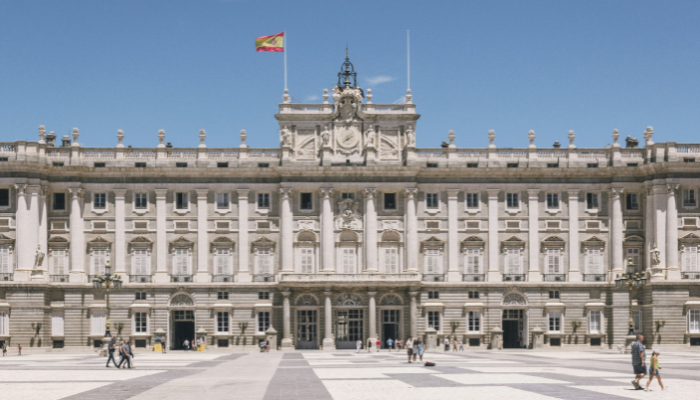
Image credit: Kristijan Arsov for Unsplash
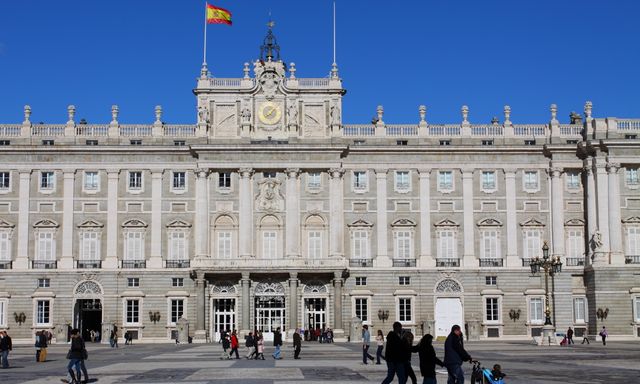
The Royal Palace is often the first place visitors head to, and for good reason.
With more than 3,000 rooms, it’s one of Europe’s largest royal residences. Although Spain’s royal family no longer lives here, the palace remains a working ceremonial venue and showcases centuries of Spanish history.
Inside, you’ll find lavish reception halls, royal armouries, intricate frescoes, and stunning chandeliers. The Throne Room and Royal Armoury are particular highlights.
Insider tip: Arrive early in the morning to avoid long queues and enjoy quieter galleries.
2. Prado Museum
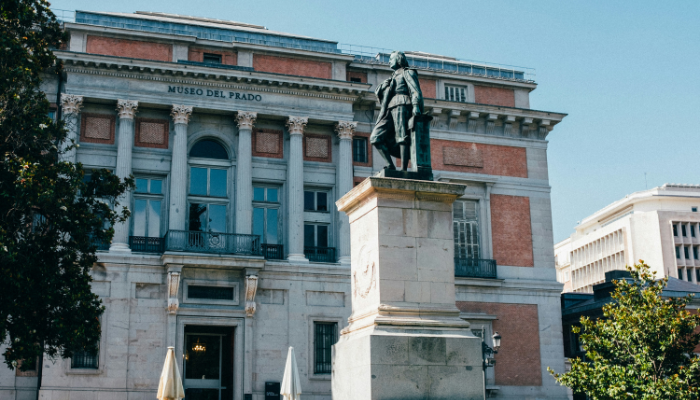
Image credit: Edgar for Unsplash
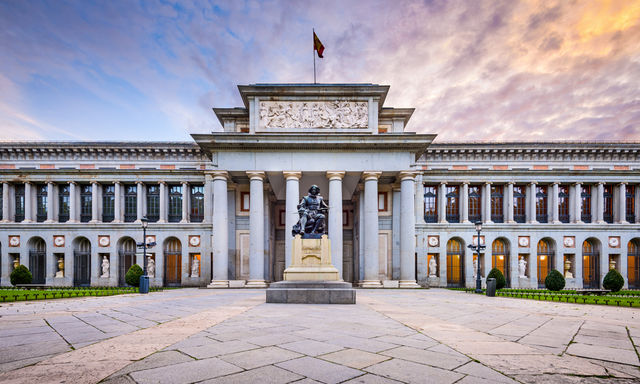
Few museums in Europe command the same respect as the Prado.
Home to masterpieces by Velázquez, Goya, El Greco, Rubens, and Titian, the museum offers an extraordinary journey through European art history.
Even visitors who don’t normally spend hours in museums often find themselves captivated by works such as Las Meninas and The Third of May 1808.
Time needed: Allow at least three hours, though art enthusiasts may want an entire day.
3. Retiro Park
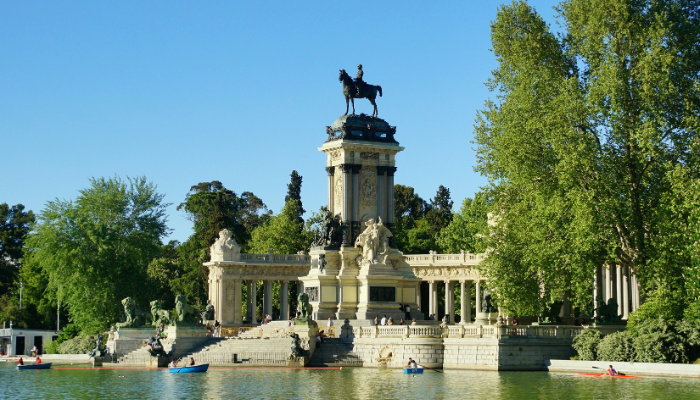
Image credit: Martti Salmi for Unsplash
After exploring museums and palaces, Retiro Park provides a welcome change of pace.
Once reserved for royalty, the park is now Madrid’s favorite green space. Locals jog, cycle, picnic, and row boats across the central lake.
The Crystal Palace, with its elegant glass structure reflecting in surrounding water, remains one of the most photographed spots in the city.
If the weather is pleasant, spend an hour simply wandering without a map.
4. Plaza Mayor
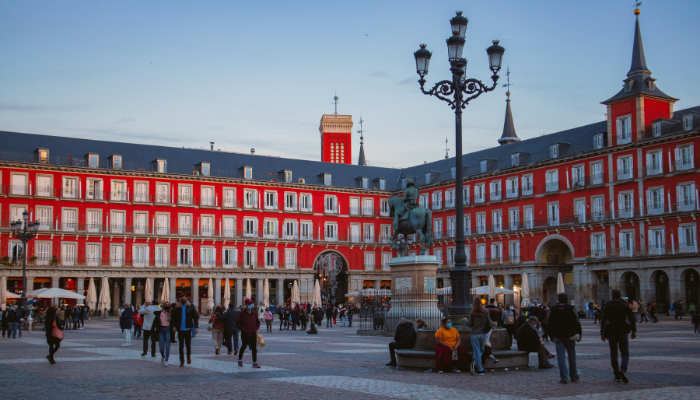
Image credit: Eduardo Rodriguez for Unsplash
Stepping into Plaza Mayor feels like entering another era.
Completed in the 17th century, this grand square has hosted royal celebrations, markets, bullfights, and public ceremonies throughout its history.
Today, outdoor cafés line the arcades while street performers entertain visitors beneath the red façades.
Many travelers stop briefly before moving on, but it’s worth lingering for a coffee and soaking up the atmosphere.
5. Puerta del Sol
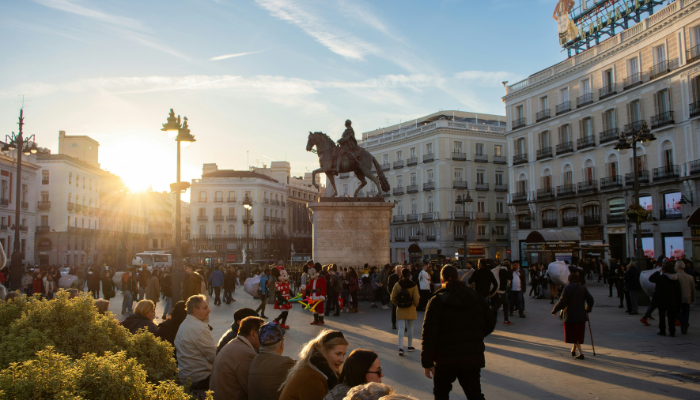
Image credit: Alex Moliski for Unsplash
Every road in Spain, at least symbolically, begins here.
Puerta del Sol is home to Kilometer Zero, the point from which Spain’s national road network is measured.
You’ll also find the famous Bear and Strawberry Tree statue, one of Madrid’s most recognizable symbols.
The square serves as a natural starting point for exploring the city center and remains one of the busiest Madrid tourist attractions throughout the year.
6. Gran Vía
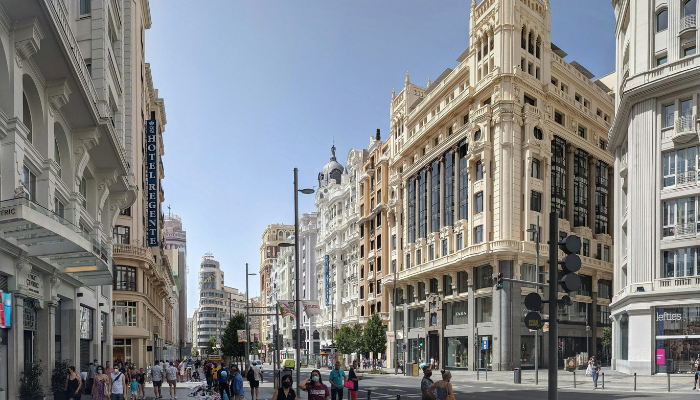
Image credit: Gregor Schram for Unsplash
If Madrid has a main stage, Gran Vía is it.
The avenue combines striking architecture, theaters, rooftop bars, shopping streets, and a constant flow of activity. During the day, visitors browse international brands and admire early 20th-century buildings. At night, illuminated façades give the street an almost cinematic atmosphere.
For one of the city’s best views, head to a rooftop terrace just before sunset.
7. Reina Sofía Museum
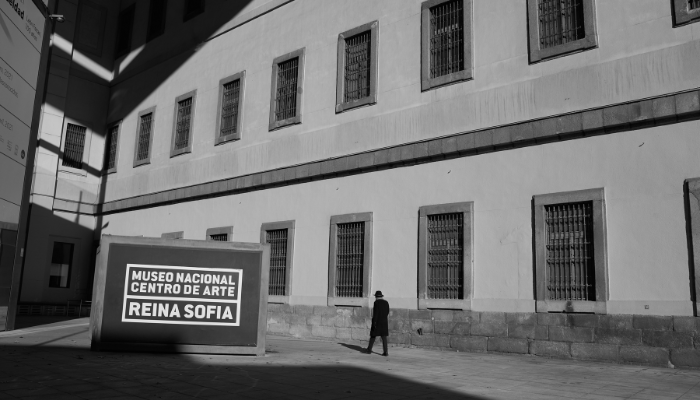
Image credit: Esteban Palacios Blanco for Unsplash
While the Prado celebrates classical art, Reina Sofía focuses on modern creativity.
Its most famous resident is Picasso’s Guernica, one of the world’s most powerful anti-war paintings.
The museum also houses works by Salvador Dalí and Joan Miró, making it an essential stop for anyone interested in 20th-century art.
Even visitors with limited museum time should consider adding this attraction to their itinerary with a Reina Sofía Museum ticket.
8. Temple of Debod
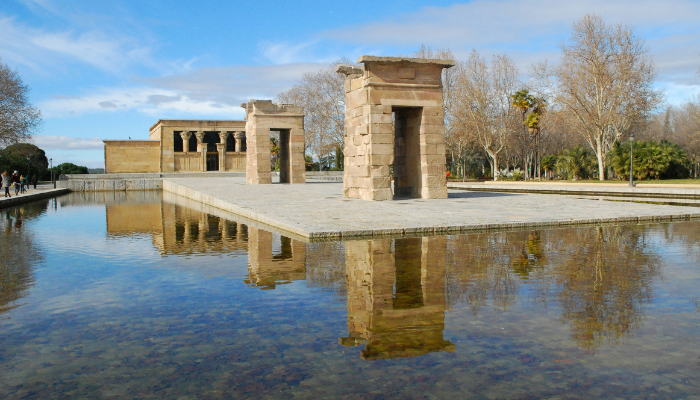
Image credit: Miguel Saenz de Santa María for Unsplash
Finding an ancient Egyptian temple in the middle of Madrid isn’t something most travelers expect.
Gifted to Spain by Egypt in the 1960s, the Temple of Debod was carefully reconstructed overlooking a park near the city center.
Its historical significance is impressive, but most visitors come for the views. As the sun sets behind the monument, the surrounding reflections create one of Madrid’s most beautiful scenes.
Bring a camera. You’ll likely need it.
9. Santiago Bernabéu Stadium
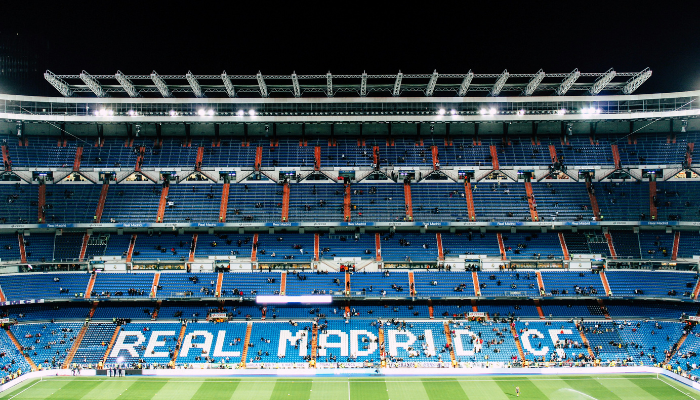
Image credit: Vienna Reyes for Unsplash
Football fans hardly need an introduction.
Home to Real Madrid, Santiago Bernabéu is one of the most famous stadiums in the world.
Even travelers who don’t follow football often enjoy the stadium tour, which provides access to trophies, interactive exhibits, dressing-room areas, and panoramic views of the pitch.
The recent renovations have transformed the venue into one of Madrid’s most modern landmarks.
Expert tip: Book your Santiago Bernabeu Stadium tickets with the Real Madrid Museum access in advance.
10. Mercado de San Miguel
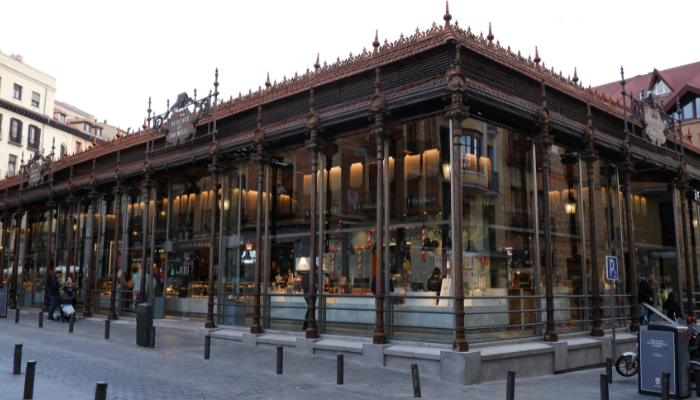
Image credit: Valeria Volosciuc for Unsplash
Madrid’s culinary culture comes alive inside Mercado de San Miguel.
Located close to Plaza Mayor, this historic iron-and-glass market offers everything from Iberian ham and seafood to gourmet tapas and Spanish desserts.
Instead of sitting down for a formal meal, visitors can sample small dishes from multiple vendors.
Early afternoons tend to be quieter, while evenings bring a lively atmosphere.
11. Almudena Cathedral
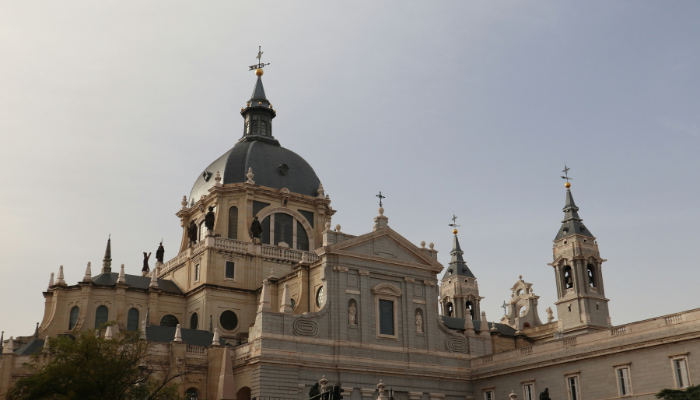
Image credit: Yevheniia for Unsplash
Standing opposite the Royal Palace, Almudena Cathedral combines neoclassical, neo-Gothic, and contemporary influences.
Construction took more than a century, resulting in a building that feels distinct from many traditional European cathedrals.
Inside, colorful ceiling decorations and modern artwork create a surprisingly fresh atmosphere.
Don’t miss the dome viewpoint, which offers excellent views across central Madrid.
12. Thyssen-Bornemisza Museum
Often overshadowed by its famous neighbors, Thyssen-Bornemisza completes Madrid’s celebrated “Golden Triangle of Art.”
Its collection bridges the gap between the Prado and Reina Sofía, featuring works ranging from Renaissance paintings to Impressionist masterpieces and modern art.
Visitors interested in art history will appreciate how the museum tells a broader story of European artistic evolution.
Expert tip: Get a Museo Nacional Thyssen-Bornemisza ticket and stay as long as you want.
13. Cibeles Palace and Fountain
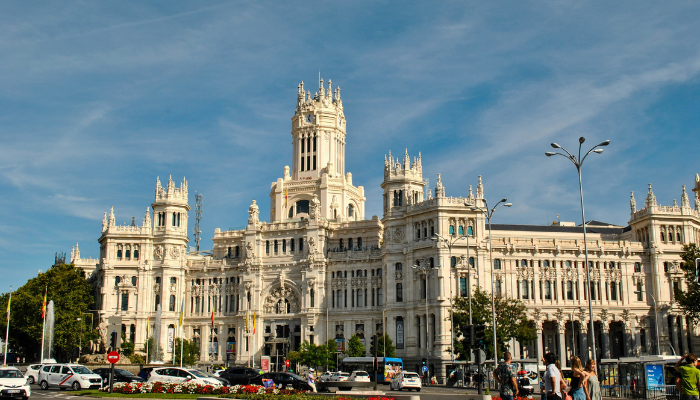
Image credit: Layla Ortega Fernandez for Unsplash
The Cibeles Fountain has become one of Madrid’s defining images.
The nearby Cibeles Palace, once the city’s main post office, now serves as Madrid’s City Hall and houses an observation deck.
From the top, visitors can enjoy sweeping views of rooftops, boulevards, and historic buildings stretching across the capital.
It’s one of the best places to understand Madrid’s urban layout.
14. Barrio de Las Letras
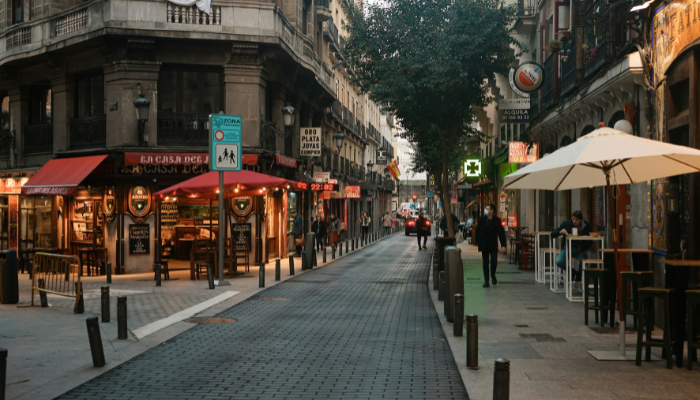
Image credit: Josefina Di Battista
Some of Madrid’s greatest treasures aren’t monuments at all.
Barrio de Las Letras, the Literary Quarter, was once home to Spain’s most celebrated writers, including Cervantes and Lope de Vega.
Today, visitors wander pedestrian streets lined with independent shops, cafés, hidden courtyards, and literary quotations engraved into the pavement.
It’s an excellent neighborhood for slowing down and experiencing a different side of the city.
15. El Rastro Market
If your visit includes a Sunday, El Rastro is a must.
This sprawling open-air market has been operating for centuries and attracts everyone from antique collectors to curious travelers.
Stalls sell vintage items, artwork, clothing, souvenirs, books, and unexpected treasures.
Part of the fun lies in exploring without a plan. You never know what you’ll discover around the next corner.
Practical Tips for Visiting Madrid Attractions
Visit During Spring or Autumn
April to June and September to October offer pleasant temperatures and fewer crowds compared to peak summer months.
Consider an Attraction Pass
If you plan to visit several paid attractions, the Go City: Madrid Explorer Pass can help reduce costs while simplifying your itinerary.
Use Sightseeing Transport to Save Time
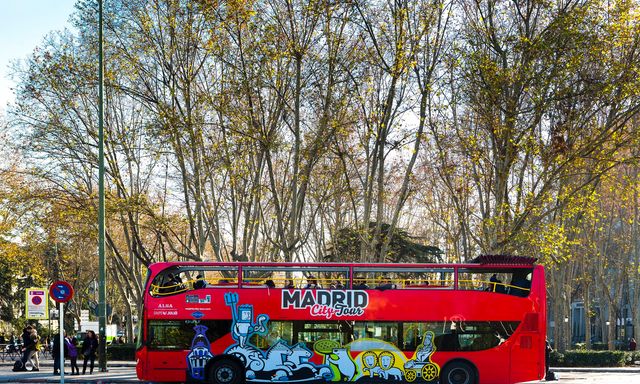
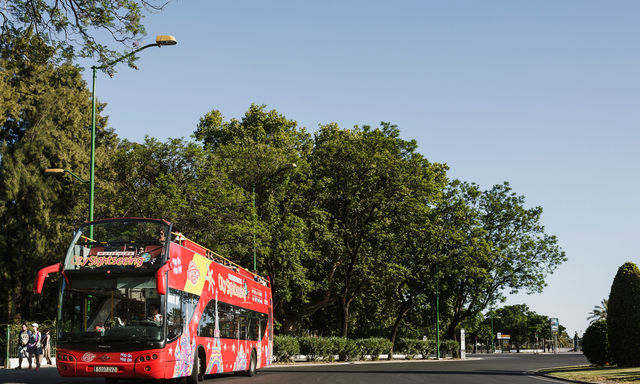
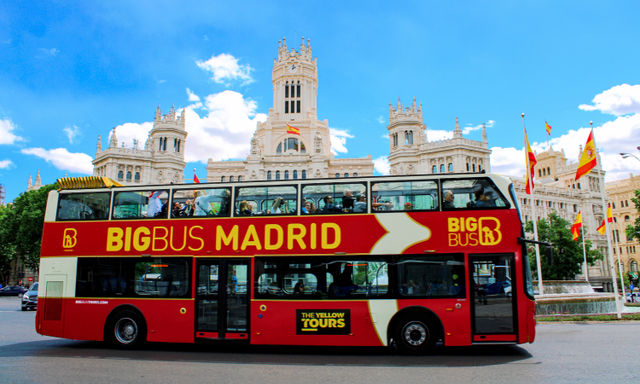
Madrid is highly walkable, but as a first-timer, it would be helpful to take a Madrid City Bus Tour as it offers an efficient way to move between key sightseeing areas while getting a useful overview of the city.
Don’t Limit Yourself to Madrid
Many travelers combine Madrid with other Spanish destinations. If you’re extending your holiday after exploring the capital, consider browsing these popular things to do in Mallorca for beach escapes, scenic villages, and Mediterranean experiences.
Final Thoughts
The beauty of Madrid isn’t found in a single landmark. It’s revealed gradually—in a quiet corner of Retiro Park, a rooftop view along Gran Vía, a masterpiece hanging inside the Prado, or a plate of tapas shared in a bustling market.
For first-time visitors, these 15 Madrid attractions offer the perfect introduction to Spain’s energetic capital. Once you’ve explored the highlights, you’ll discover there’s still plenty more waiting. Browse more ideas for things to do in Madrid and uncover fascinating Madrid fun facts before your trip.