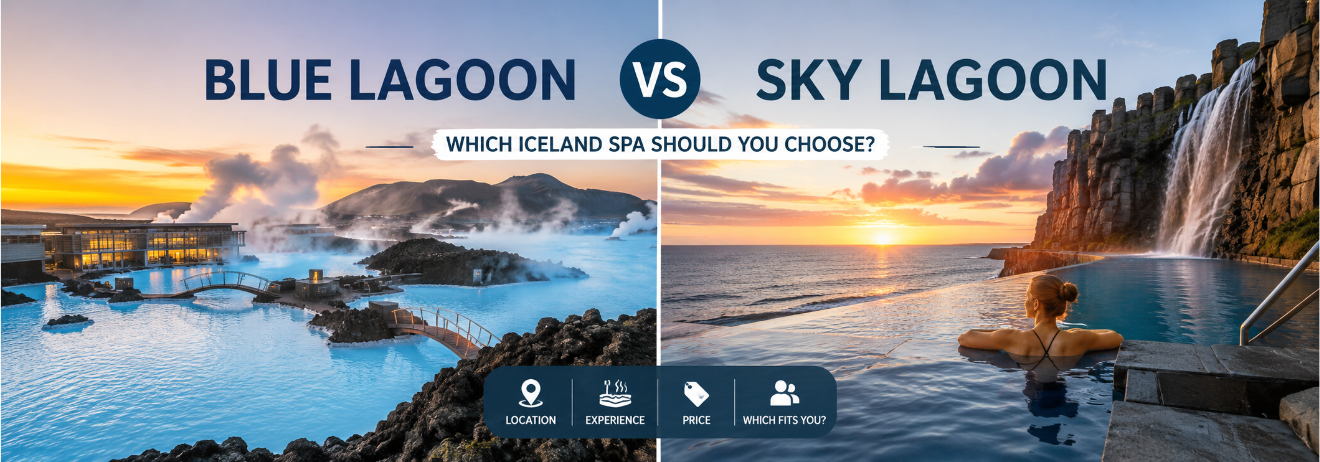
Here’s the short version of Blue Lagoon vs Sky Lagoon, because you probably have a flight to catch. If it’s your first trip to Iceland and you want the postcard—that milky-blue water everyone’s seen on Instagram—book the Blue Lagoon, ideally on your arrival or departure day, since it’s only 20 minutes from Keflavík Airport. If you’re staying in Reykjavík and care more about ocean views, a calmer crowd, and a proper wellness ritual, choose Sky Lagoon, roughly 15 minutes from downtown. Both are genuinely excellent. They’re just not the same experience, and choosing wrong can cost you a couple of hours and a decent chunk of your budget. Below is exactly how they differ, current 2026 prices, and which one suits the trip you’re actually taking.
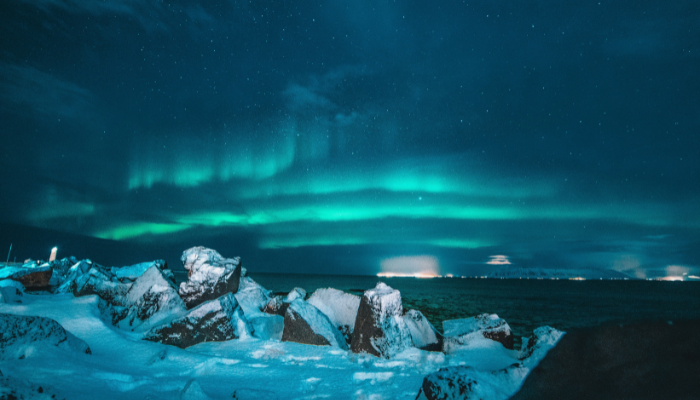
Image credit: Nicolas J Leclercq for Unsplash
Blue Lagoon vs Sky Lagoon at a glance
| Blue Lagoon | Sky Lagoon | |
| Location | Reykjanes Peninsula — 20 min from KEF airport, ~45–50 min from Reykjavík | Kópavogur, on the Reykjavík coastline — ~10–15 min from downtown |
| Setting | Milky-blue water in black lava field | Clear water with an ocean infinity edge facing the Atlantic |
| Signature | In-water silica mud mask + swim-up bar | 7-step Skjól ritual (sauna, cold plunge, body scrub) |
| Size/feel | Large (~8,700 m²), room to spread out | Compact, capped at ~500 guests a day |
| Admission cost (including transfer) | ISK 24,000 | ISK 19,000 |
| Minimum age | 2 | 12 |
| Best for | First-timers, layovers, families with young kids | City stays, couples, sunset soaks, a calmer crowd |
Prices are dynamic and rise for summer and sunset slots. Treat these as starting points and check the live rate for your date.

The Blue Lagoon: iconic, otherworldly, and a little unpredictable
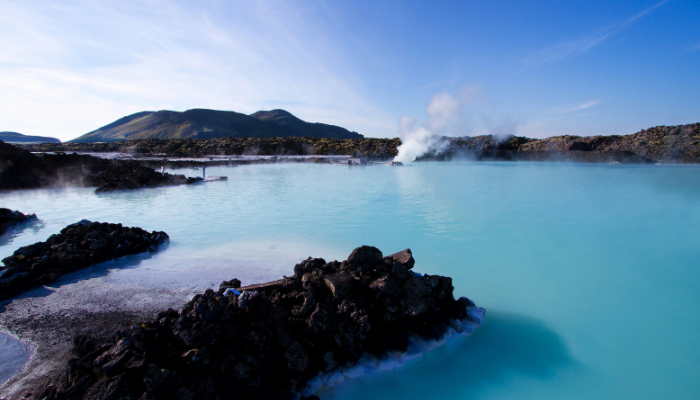
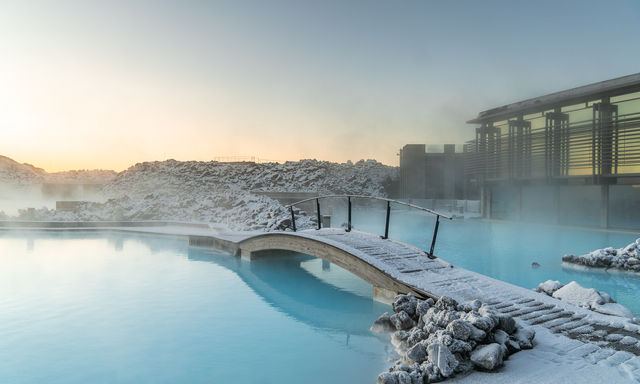
Image credit: F D for Unsplash
The Blue Lagoon is the one you’ve already seen, probably a hundred times, on other people’s feeds. Yes, the water really is that striking shade of milky blue that comes from silica and algae suspended in mineral water fed from the neighboring geothermal plant. In person it looks faintly unreal, and the black lava field wrapped around it gives the landscape an almost otherworldly appearance. For many first-time visitors, this is the moment Iceland finally feels real.
The lagoon is also surprisingly spacious, around 8,700 square meters, so even on a busy afternoon you can drift off to a quieter corner. A basic ticket covers entry, a silica mud mask from the in-water mask bar, and one drink from the swim-up bar. You can upgrade it by adding a second mask, a bathrobe, slippers, and a restaurant reservation. There’s a sauna, a steam cave, and a waterfall to stand under while you’re at it.
Two things you’ve to be careful about. First, the water is hard on hair—tie it up and load on conditioner beforehand, or your hair becomes extremely dry and tangled afterwards. Second, and more important for 2026: the Blue Lagoon sits on the Reykjanes Peninsula, where volcanic activity has flared repeatedly since late 2023, occasionally forcing precautionary closures at short notice. It reopens each time and safety is managed carefully, but if you’re building your trip around it, check current Blue Lagoon ticket options and the live operating status before you commit, and keep a loose backup day. It’s the single biggest planning variable here, and it’s why a lot of travelers now treat Sky Lagoon as their reliable default.
Sky Lagoon: the newcomer that keeps winning people over
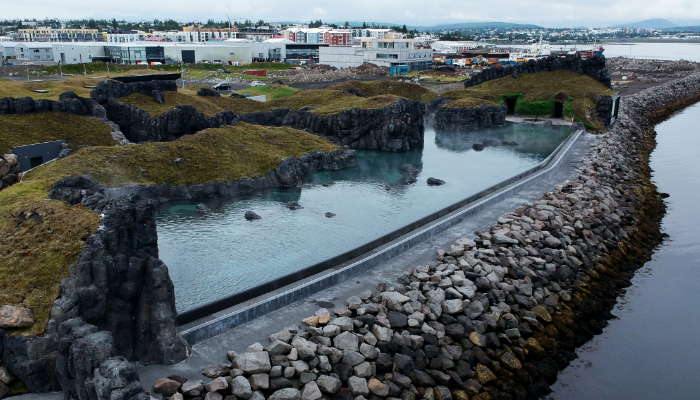
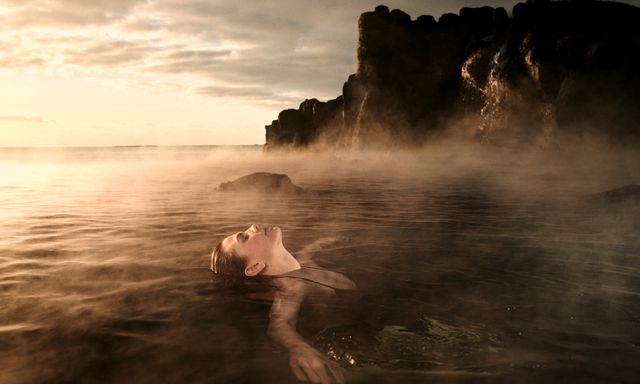
Image credit: Freysteinn G. Jonsson for Unsplash
Sky Lagoon only opened in 2021, and it has quietly become a favorite among travelers looking for a more intimate spa experience. The setup is completely different. Instead of a sprawling lagoon in a lava field, you get a single infinity-edge pool built into the coastline, its far lip dissolving straight into the North Atlantic. On a clear evening the water, sky, and sea blur into a single line, and if you time it for sunset it’s one of the best-value views in the country. One of its biggest advantages is, it’s about ten minutes from central Reykjavík, so it folds neatly into an ordinary city day.
The headline experience is the Skjól Ritual: a seven-step sequence you move through at your own pace—warm lagoon, cold plunge, a sauna with a floor-to-ceiling ocean window, a cool mist, an Icelandic body scrub, steam, then a rinse before you sink back into the lagoon. It takes about an hour, and done unhurried it genuinely resets you. Crucially, the ritual is included even in the entry-level pass; the pricier ticket simply upgrades you to a private changing room.
A couple of caveats. Sky Lagoon caps daily numbers around 500 and skews adults-in-feel: the minimum age is 12, so it’s not the pick if you’ve got small kids in tow. And because it’s compact, peak slots (weekend evenings) can feel snug, so a weekday morning or a late soak is calmer. Advance booking is recommended throughout the year.
Price and crowds: which is actually better value?
On paper the prices are close, and both spas use dynamic pricing that climbs for summer and sunset, so read every figure as a floor. As of mid-2026, Blue Lagoon Comfort admission ticket with transfers starts around ISK 24,000 (about $190). Sky Lagoon’s including transfers starts near ISK 19,000 (about $152).
So, which one offers better value depends on what matters most to you. Sky Lagoon bundles its signature ritual into the base price, whereas at the Blue Lagoon you’re really paying for the water and the setting, with masks and upgrades stacked on top. For couples or families the gap widens once you add Blue Lagoon’s premium tiers—but the Blue Lagoon also admits kids from age 2, which Sky Lagoon flatly won’t.
Crowd levels are another important factor like other attractions in Reykjavik. The Blue Lagoon’s fame keeps it busy through the day in high season despite timed entry, while Sky Lagoon’s daily cap keeps things noticeably calmer. Whichever spa you choose, book the first slot of the morning or an evening one, and steer clear of July, Christmas week, and Easter if a serene soak is the whole point.
Which lagoon fits your trip?
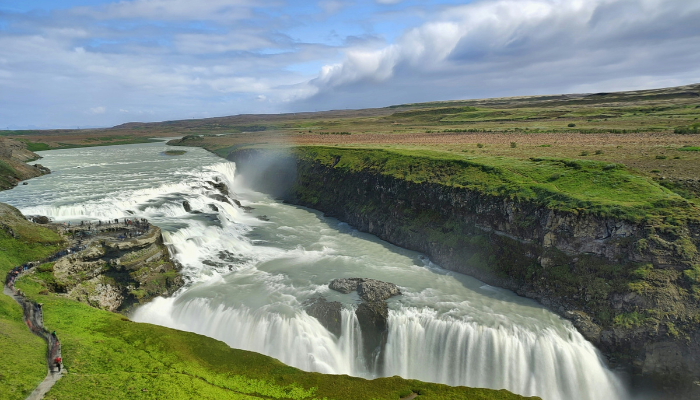
Image credit: Anton B for Unsplash
Rather than crown an overall winner, match the lagoon to how you’re actually traveling.
On a layover or your arrival/departure day: Blue Lagoon, easily. It’s 20 minutes from Keflavík, offers luggage storage, and turns a dead transit window into the best jet-lag cure. It’s an easy way to recover from a long flight before heading into Reykjavík.
Traveling with young children: Blue Lagoon again. The age-2 minimum and the sheer space make it the family-friendly choice; Sky Lagoon’s 12-and-up rule rules out anyone with toddlers.
Based in Reykjavík, tight on budget or time: Sky Lagoon. Cheaper at entry, closer, ritual included, and easy to drop into an evening after a day out. Pair it with a Golden Circle day tour and you’ve got a full, well-paced day that ends with the sun sliding into the Atlantic.
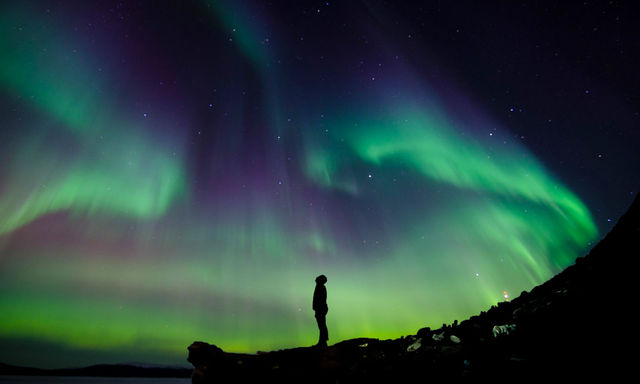
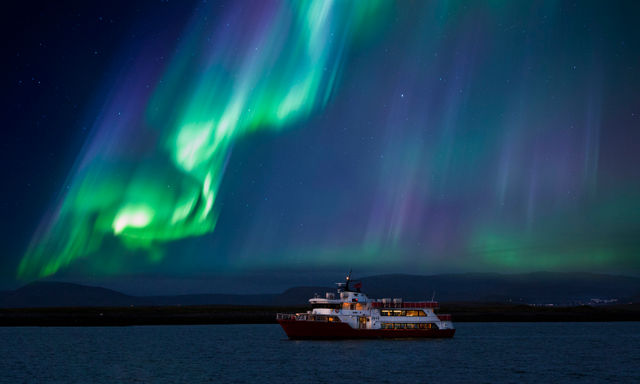
Couples, honeymooners, and sunset chasers: Sky Lagoon. The infinity edge at golden hour, the lighter crowd, and the no-rush ritual make it the more romantic of the two. In winter it doubles as a superb Northern Lights soak.
Set on the iconic shot: Blue Lagoon. Nothing else looks like that milky-blue water, and for plenty of people the bucket-list photo is the entire point. Just plan around the volcano caveat.
Four or more days and can’t decide: Do both. They’re different enough that they never feel repetitive. Blue Lagoon on your airport day, Sky Lagoon on a Reykjavík evening.
Before you book
Whichever way you lean, book early. The Blue Lagoon can sell out weeks ahead in peak season and shifts with volcanic activity, so lock in a slot and keep a backup day; Sky Lagoon is easier but still worth reserving — book it through ISANGO or on the official Sky Lagoon site directly. Confirm current prices, opening hours, and the Blue Lagoon’s live status before you pay, since all three move around. And if you’ve got a spare afternoon, it’s worth browsing 10 best things to do in Iceland. The lagoons are the headline, but the city and the Golden Circle are what round the trip out. Then go enjoy the water. You’ve earned the wrinkly fingers.