
Barcelona City Tour Hop-On, Hop-Off Bus
-
-

-
- +3 More Images
Activity Schedule
Key Highlights
- The hop-on, hop-off tour allows you to plan your own Barcelona sightseeing itinerary
- The interconnected routes and stops cover all the major attractions in the city
- From Gothic Quarter and Sagrada to Montjuic Mountain; cover major sights of the city with your ticket!
- Audio commentary available in multiple languages
- Discount booklet including offers on local attractions, eateries, shops
- Both printed or smartphone vouchers are accepted!
Activity Overview
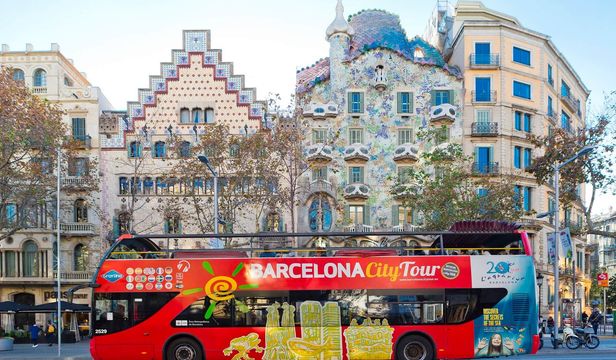
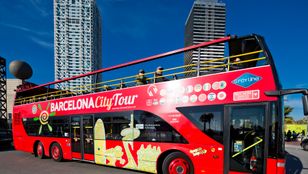
The Barcelona Hop-On, Hop-Off tour allows you to discover the many attractions of this delightful city at your own pace. From the unique Gaudi architecture to the lively beaches; all of Barcelona is explored onboard the red, open-topped buses. Hop on and off a double-decker bus as many times as you wish or just sit and enjoy the view. Informative audio guides in multiple languages are available in buses, illustrating the unique history behind the city’s famous monuments and attractions.
You will be given a map and guide outlining all of the stops on each of the routes, and offering discounts for different establishments in the city. The luxury buses are adapted for people with limited mobility and have an electric roof to use in the event of rain; they are fitted with anatomical seats and heating on both decks.
The West route (orange) covers the most emblematic buildings such as the FC Barcelona stadium and the National Museum of Art of Catalonia while the East route (green) take you to the most artistic part of the city, like Plaça Catalunya and Park Güell.
You can choose between a 24 or 48 hours ticket option as per your travel plans.
MAJOR ATTRACTIONS COVERED
- Sagrada Familia
- Plaça Catalunya
- Cathedral Gothic Quarter
- Port Vell
- Montjuic Mountain
- Bogatell Beach
- Park Guell
- Tibidabo
- La Pedrera
- Casa Batlló
- Camp Nou
For more information on routes and schedules, Please check USEFUL DOWNLOADS.
What’s Included & Not Included
Inclusions
- 24 or 48 hours hop-on, hop-off ticket ( As per the option chosen)
- Multilingual audio guide in Spanish, Catalan, English, French, German, Italian, Portuguese, Dutch, Swedish, Norwegian, Russian, Chinese, Japanese, Arabic, Hebrew, and Turkish
- Air-conditioned double-decker open coaches
Exclusions
- Entrance to attractions
Download Guide & Map
Important Information
Voucher information: You can show your voucher on your smartphone (But if you’d rather print a copy – that’s fine too!)
Wheelchair accessibility: Yes
Barcelona is a functioning city and weather, traffic and events (demonstrations, sport and cultural events, official acts, etc.) or force majeure reasons may occasionally cause disruption.
Timings and stops are subject to change. The updated map will be available on the bus.
Ultimate Travel Combos & Deals
- Instant confirmation Saver CombosBarcelona City Tour Hop-on, Hop-off & Gothic Quarter Walking Tourfrom
US$ 51.64US$ 49.06 per person - Instant confirmation Saver CombosBarcelona City Tour Hop-on, Hop-off + Montserrat tourfrom
US$ 101.04US$ 95.99 per person
Satisfied Customers
Loved this hop on hop off tour! Each route was at least 2 hours & shared very interesting & valuable information about the city! I felt like I got to see all the sights I wanted...
This is the way to go. We have used the Hop-On-Off tours across Europe and have always found them the best way to get oriented to a new cite....
Being in such a large city made the hop on off bus a chance to see places you wouldn't get to see by a taxi, fantastic tour and recommend to anyone who visits barcelona...
Excellent experience, very well organized, best way to visit Barcelona !...
We were very impressed with the Hop on Hop off buses in Barcelona. We didn't have to wait for very long at any of the stops and a member of staff even asked if everyone could...
Top attractions in Barcelona
Things to do in Barcelona
Cities Near Barcelona
Travel Inspiration
-
 CultureBarcelona in Winter: Is It Worth Visiting? Best Things to Do & What to Expect
By half past five on a December evening, the light has already gone from Passeig de Gràcia. Shop windows glow, a chestnut… The post Barcelona in Winter: Is It Worth Visiting? Best Things to Do & What to Expect appeared first on The Guidebook - isango!.
Read more ➟ - Isango InsiderThe Best Beaches in Spain for Couples – Introduction to Romantic Beaches in Spain
When it comes to love and romance, few places are as charming as Spain. With its sunny beaches, lively culture, and warm… The post The Best Beaches in Spain for Couples – Introduction to Romantic Beaches in Spain appeared first on The Guidebook - isango!.
Read more ➟ - 5 Minutes WithBest Spring Break Destinations in Europe for 2026
Spring in Europe is, in one word—magical! It feels like the perfect bridge between winter and summer, when nature wakes up from… The post Best Spring Break Destinations in Europe for 2026 appeared first on The Guidebook - isango!.
Read more ➟
Get the latest offers and inspiration
Sign up to our newsletter and get the best isango! has to offer
- Enter a valid email
