
Cork, Blarney and Cóbh from Dublin: By Train and Coach, City Tours
-
-
-
- +2 More Images

Activity Schedule
Key Highlights
- See the beautiful countryside of southern Ireland and hear the stories and legends
- Get the gift of eternal eloquence (or so they say) when you kiss the Blarney Stone!
- Hear the poignant stories of Irish emigration at Queenstown
- Visit the last port of call for the ill-fated Titanic
- Sightseeing coach tours to places of interest combined with eco-friendly train travel
Activity Overview
This fun full-day tour combines rail and coach travel to introduce you to some of the loveliest and most interesting parts of southern Ireland.
Catch the Cork train from Dublin and travel through the soft green countryside of Kildare. The journey reveals typically Irish scenes such as racehorses being put through their paces in the Curragh.
Your first stop is the town of Portlaoise, home to Ireland’s only maximum security prison – ask your host to point it out. You will pass the town of Templemore – home of the Garda Síochána Training College – Ireland’s national (and unarmed) police force. Shortly after Templemore, you pass Loughmoe Castle, which can be clearly seen on the southern side of the train.
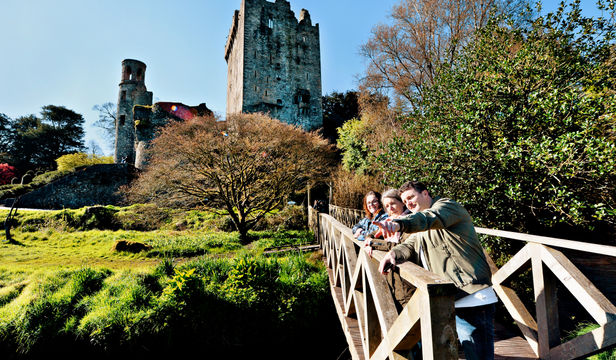
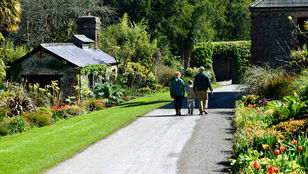
Stop at Cork and make a side-trip by coach to Blarney with its medieval castle and magnificent gardens. You'll have time to linger and enjoy the atmosphere of this enchanting place. And while you are there don’t miss the chance to kiss the famous Blarney Stone and you’ll never be lost for words again. Or so the saying goes!
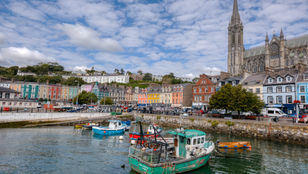
Enjoy a city tour of charming Cork before going on by train to the seaside town of Cóbh. You will visit St. Colman’s Cathedral before proceeding down along the seafront, passing the former White Star Line offices en route to the beautifully restored Victorian railway station/transatlantic terminal. This is now the Cóbh Heritage Centre, home to the Queenstown Story exhibition has many poignant accounts of Irish emigration and the first, last and fateful voyage of the great ship Titanic.
What’s Included & Not Included
Inclusions
- Reserved seat in train
- Sightseeing in a comfortable coach
- English-speaking hosts on the train and guides on the sightseeing tours.
- Live commentary on the train and coach tours
- Entrance fees to Blarney Castle and gardens
- Entrance fees to Cobh Heritage Centre
Exclusions
- Hotel transfers
- Food and beverages
Important Information
Voucher information: You can show your voucher on your smartphone (But if you’d rather print a copy – that’s fine too!)
There is a dining car on the train, serving full Irish breakfast between Monday and Friday, and light breakfast on Saturdays. You may ask your host for details.
Unfortunately, food is not included in the tour price, but there will be stops where you can grab something to eat.
Satisfied Customers
Excellent! We would book again w/Isango. Representatives very helpful in booking, confirming and information provided. Our tour guide Jonathan and bus driver were the BE...
We were very happy with the whole experience. The trip was excellent. Our guide was really enthusiastic and informative and it made the whole trip really enjoyable as we spent...
Jim Reid was a vey good tour guide....
Top attractions in Dublin
Things to do in Dublin
Travel Inspiration
-
 5 Minutes WithWhy the Guinness Storehouse Is a Must-Visit in Dublin
When talking about iconic attractions in Ireland’s capital, Guinness Storehouse consistently ranks at the very top. More than just a brewery tour,… The post Why the Guinness Storehouse Is a Must-Visit in Dublin appeared first on The Guidebook - isango!.
Read more ➟ - AdventureRaise a glass to Dublin: The City that knows how to Party
The Emerald Isles are waiting for you! The post Raise a glass to Dublin: The City that knows how to Party appeared first on The Guidebook - isango!.
Read more ➟ - Isango InsiderTop Things to Do During FIFA World Cup 2026
I’ll be honest—if I were flying across the world for the FIFA World Cup 2026, I would never want my trip to… The post Top Things to Do During FIFA World Cup 2026 appeared first on The Guidebook - isango!.
Read more ➟
Get the latest offers and inspiration
Sign up to our newsletter and get the best isango! has to offer
- Enter a valid email
